Tag: cyber security

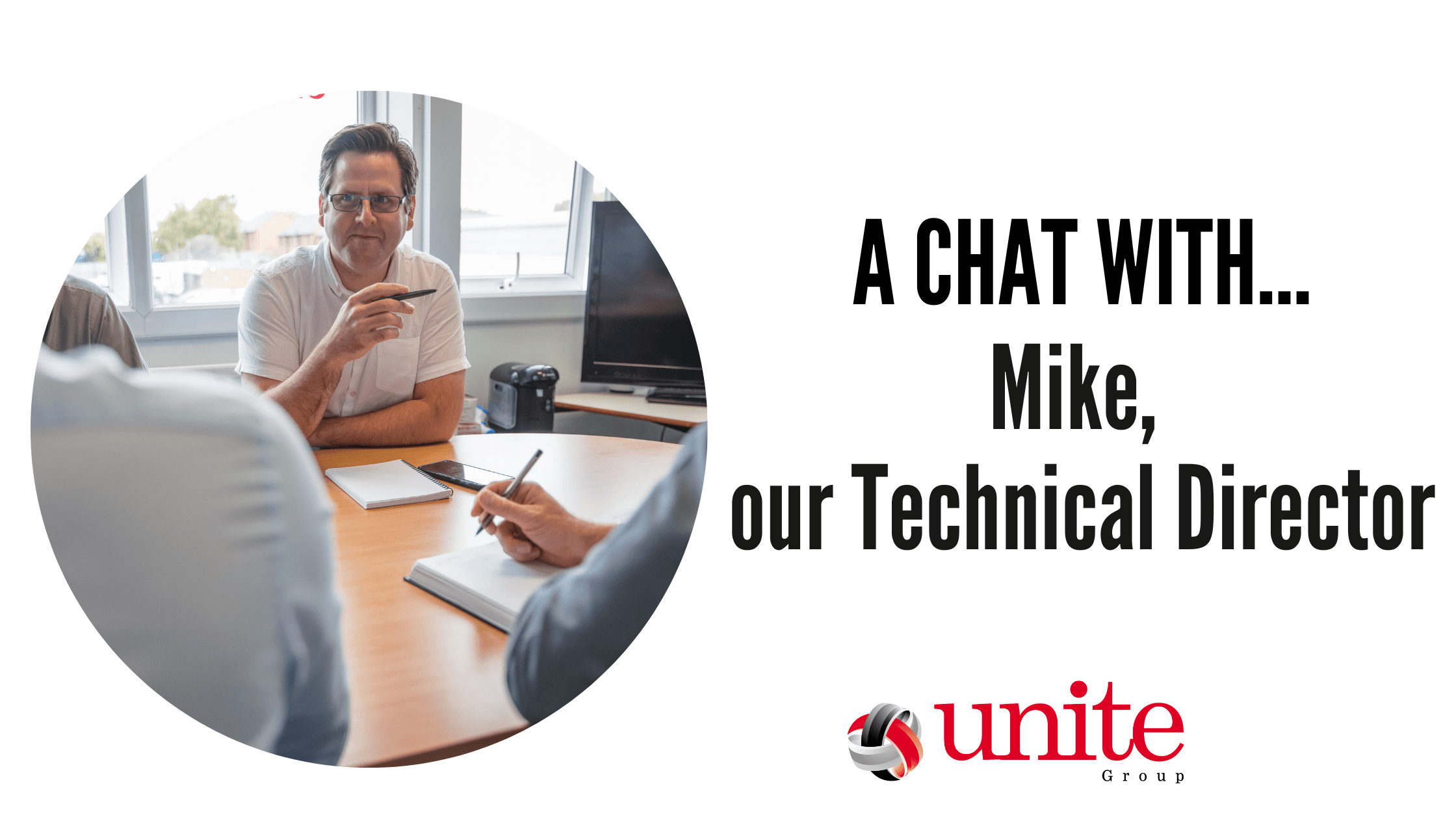
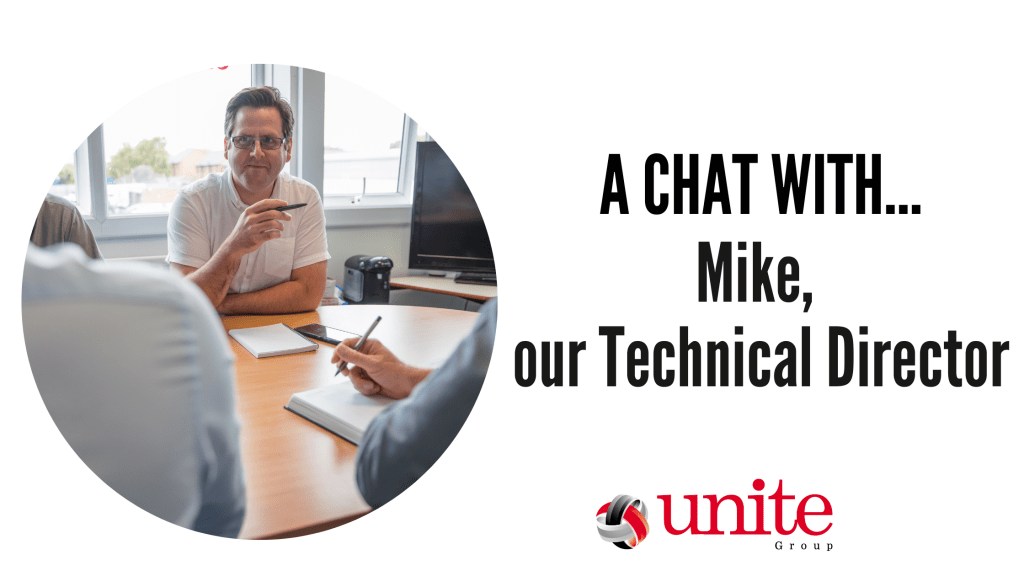
  • A chat with Mike, our Technical Director

    A chat with Mike, our Technical Director

    Mike, our Technical Director

    Following on in our meet the team series, we introduce you to Mike. Mike is our Technical Director here at The Unite Group and mostly focuses on the IT side of the business.

    We recently had a chat with him to find out a bit more about him and his role…

    Growing up, what did you want to be?

    I never really knew what field I wanted to go into when I was younger. However I did always enjoy engineering and problem solving. So naturally I ended up doing tech & sciences which led me into discovering a passion for IT and business. I was told by a careers advisor at school that as I was an early riser and liked the outdoors I should be a farmer, so I’m glad I didn’t follow that advice!

    What is your role at The Unite Group and how did you end up where you are now?

    I am one of the directors within the group and oversee most technical IT aspects of the company and IT projects. I have worked in IT for 23 years. In roles ranging from IT helpdesk, support desk team leader, IT consultant and GIS analyst. After starting SMT Technologies with Dean we later merged our business with Unite Communications. This formed The Unite Group, combining the IT expertise of SMT Tech with the comms expertise of Unite landing me here amongst a great team.

    What does a typical day look like at The Unite Group?

    As we service a whole host of companies for comms, IT and social media we don’t really have a typical day in the office. I  can end up working on any project if the team escalates issues to me. This is one of the exciting parts of the job! Although to summarise a standard week I will mostly be working on planning projects and meeting with clients to discuss the IT options available to them, working with the team on any escalations and trying to fit in work on the groups IT and systems also.

    What is your most and least favourite part of the job?

    I most enjoy planning and deploying new solutions and systems to overcome issues for clients and our own business, it’s like solving a puzzle!

     As for the least favourite part I would have to say, and Lorraine would probably agree, I don’t like completing the finance paperwork we need to keep on top of so I often cause her a headache chasing me to complete or submit information she needs.

    What is your greatest achievement?

    I would have to say it would be the hard work put into our company which saw us grow from a small 2 man firm into the group we are today. It’s a great source of pride and we really have a great team throughout which delivers a great atmosphere!

    What is the best piece of advice you’ve been given?

    Simply try your best and don’t give up, something instilled firmly by my family as a youth and as a married adult and its very much the theme of my favorite poem, IF, with the line “Or watch the things you gave your life to, broken,

        And stoop and build ’em up with worn-out tools very much instilling the fact that at times you will hit hardship and see a dream dashed but if you just keep on you can make something better. I think most people can relate closely to that with all the tragedies and hardships recently.

    Where do you see yourself in 10 years’ time?

    We have some exciting plans to scale and grow the group and the offerings we deliver so I very much see myself still here, maybe with a 4 day week if I’m lucky! I don’t like having nothing to do so the hustle and bustle of the business is great.

    How do you unwind outside of work?

    I enjoy zoning out to music. I listen to anything from classical through to country and heavy rock & metal depending on my mood. My current favourite playlist is leaning very heavily to Pink Floyd and Creedence Clearwater Revival for a bit of a retro kick. I also enjoy cooking (when it’s not a rush just to get dinner out) and we as a family enjoy traveling when possible.

    To arrange a chat with Mike, or if you want to see how The Unite Group can help you with your business technology needs, contact us on 0191 466 1050.
  • The role passwords play in a world of cybercrime

    The role passwords play in a world of cybercrime

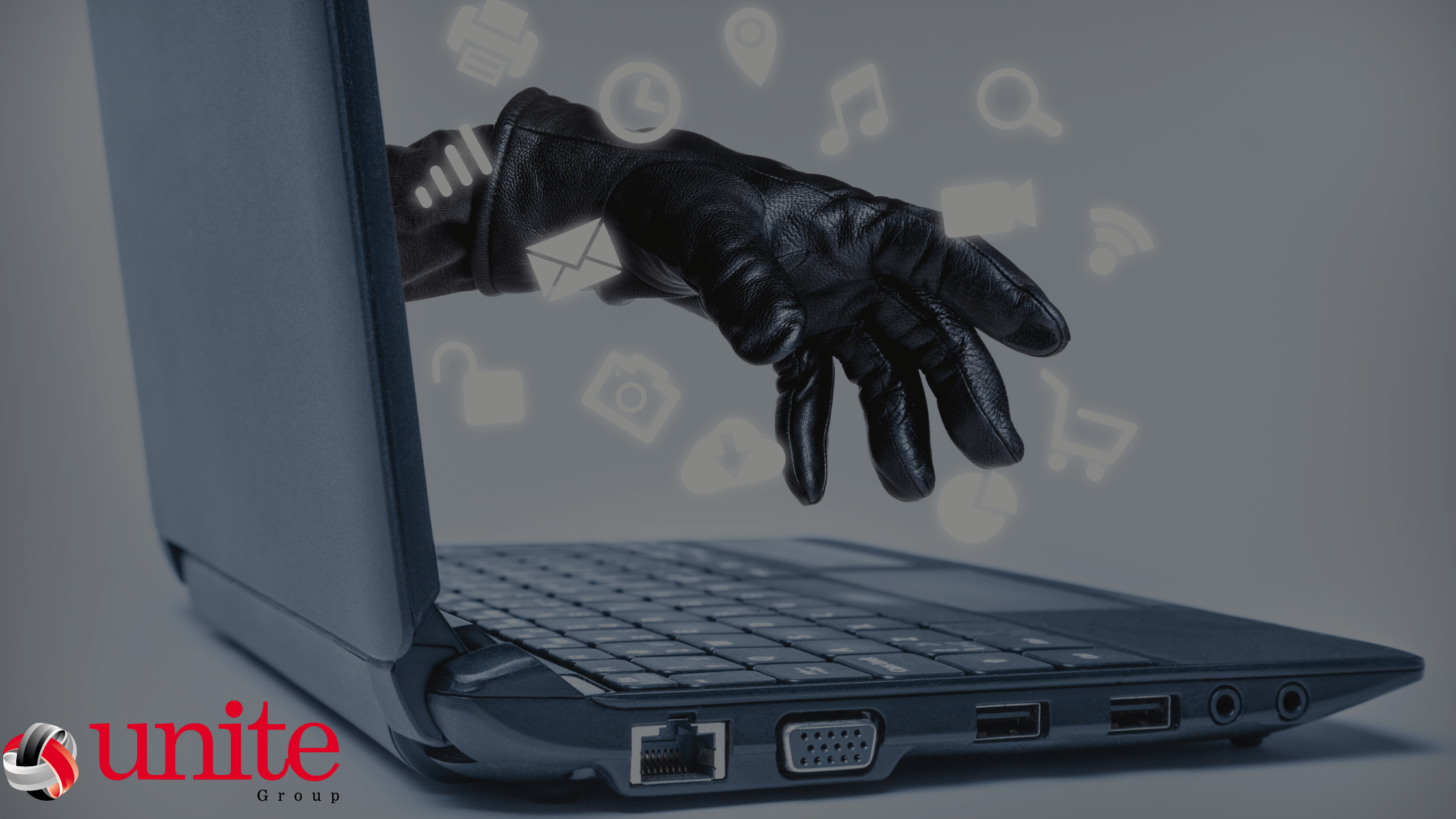
    protect your passwords against cyber crimes
    Protect your passwords against Cyber Crimes.

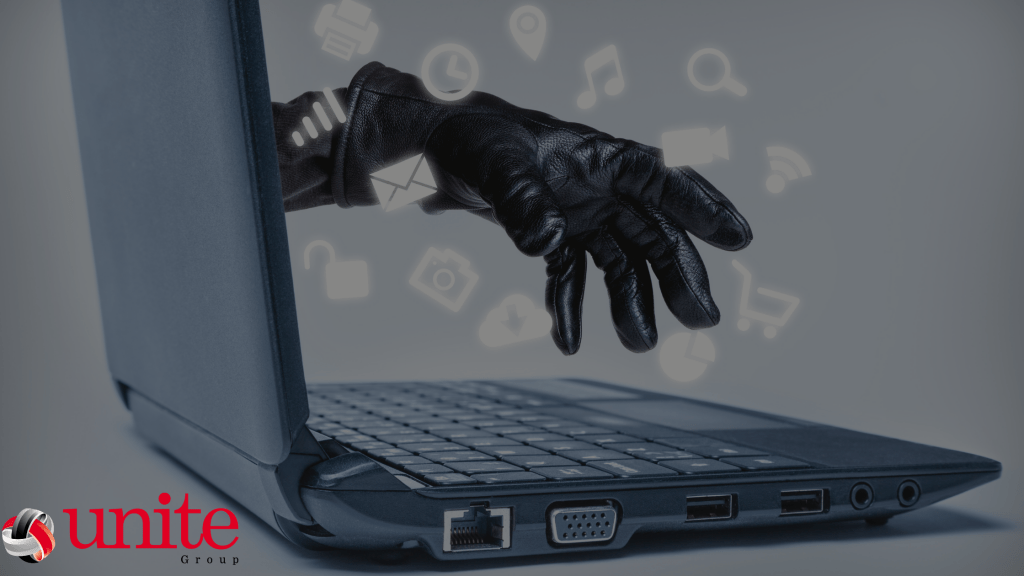
    For businesses, one weak password can be the cause of a major cybersecurity incident. Here at The Unite Group, we help businesses take measures to ensure they are doing everything possible to reduce the chance of falling victim to an account compromise attack. Whilst having a strong password is a good start. There are other technologies and processes that businesses can implement to reduce this risk. In this article, we will discuss some common methods of password attack. Including how to create a secure password and other ways that businesses can stay safe in a world of cybercrime.

    Common methods of password attack

    Brute Force

    A brute force attack is where a cybercriminal attempts to crack a password by submitting many passwords or passphrases with the hope that one of them will be correct. This is not a manual process. Instead hackers will use a tool that can submit millions of login attempts every second, each with a different credentials.

    Dictionary Attacks

    Dictionary attacks are a form of brute force attack whereby the cybercriminal runs through a list of common words in an attempt to find the correct password. More sophisticated dictionary attacks will also use words and phrases relevant to the target. This can include their name, pets’ names and birthdays.

    Past Data Breaches

    Many individuals will reuse passwords across multiple websites and systems. Therefore, if one of these websites has a data breach then all the users’ passwords are leaked. Cybercriminals can use these on other websites and systems.

    Phishing

    Phishing attacks are a form of social engineering where a cybercriminal imitates a trusted entity and tricks an individual into opening a fraudulent email, SMS, or instant message. This message is designed to deceive the victim. Often encouraging sharing sensitive information or clicking a link that will run malicious code. There are many forms of phishing attacks that range from untailored bulk emails to highly sophisticated spear-phishing attacks. Common credential phishing attacks include malicious emails that ask employees to reset or update their passwords.

    How to create a secure password

    An understanding of the common methods of credential attacks should guide how employees should create a secure password. In order to avoid brute force and dictionary attacks, passwords should be long and complex. This can include using numbers, symbols and uppercase letters, without using dictionary words or names.

    For example, the password ‘janedoe’ would take 2.4 seconds for a hacker to crack. If numbers, symbols and uppercase letters are added to make ‘JaneDoe295!’, this would take 31 hours to crack. However, if a credential of the same length but with random letters and characters, such as ‘f^Hl86$p-x$’ is used, it would take 9 billion years, making it immune to brute force attacks.

    In order to avoid a previous data breach being the cause of an account compromise attack, employees should not reuse passwords across multiple sites or services. However, the average organisation uses 80 SaaS applications, and it is unrealistic to expect an employee to remember 80 long and complex passwords. To solve this issue, and avoid credential attacks through phishing, we recommend businesses should also implement other technologies to increase security.

    Other ways businesses can stay safe

    To avoid phishing attacks, businesses should implement a comprehensive email security solution. Many modern email security solutions use AI to block such phishing attacks before they even land in an employee’s inbox. Some solutions also include web filtering. This will block any malicious URLs, further decreasing the chance of falling victim to an attack.

    It should also be noted that passwords should not be the only line of defence against account compromise attacks. Here at The Unte Group we also recommended implementing multifactor authentication (MFA). MFA is an authentication process where a user must provide two or more forms of identification to log in to their account. Typically, the forms of identification are two of the following: something the user knows (such as a password), something they are (such as biometrics) or something they have (such as a hardware key or trusted phone). Deploying multifactor authentication is simple and it prevents 99.9% of all account compromise attacks.

    As it is not possible to remember 80+ long, complex credentials, one solution is to make use of a password manager. A password manager can store passwords for an employee, which they can access with a single password. When using, it is essential that the master password is strong. Enabling multifactor authentication can improve security.

    All businesses should be taking password security seriously as the consequences of poor password hygiene can be severe. To find out more about password security, or which solution is right for your business, contact us today.

  • The Unite Group’s Top Tips for Cyber Security

    The Unite Group’s Top Tips for Cyber Security

    cyber security

    Cyber Security is at the core of everything that we do at The Unite Group.

    Protecting and securing your data is a priority, and we have a number of solutions for this when outsourcing your IT with The Unite Group.

    We understand that not everyone can be an expert in cyber security, so we have put together our top tips on how to keep your data secure.

    1. Keep your software up to date.

    Outdated software and applications are easier to hack into, one way to avoid this is by turning on automatic updates on your devices and desktop web browser. It is also essential that you update your plug ins too! Many harmful malware attacks take advantage of software vulnerabilities, often in common applications such as operating systems and browsers. View software updates as an essential to protect the cyber security of your business.

    • Make use of anti-virus protection and firewall.

    Anti-virus protection is a great solution to prevent malicious attacks, the protection blocks malware and other malicious viruses from entering your device. The software acts as a cyber security mechanism by scanning, spotting, and inhibiting potential viruses from entering the system. Whereas a firewall filters the traffic that is directed to your website and filters out hackers and viruses. A firewall acts as a barrier protecting your system from potential threats.

    • Use strong passwords.

    Having a strong password prevents hackers and scammers from accessing your accounts and confidential information. It is suggested to have a password between 8 and 64 characters which includes uppercase and lowercase letters, numbers and special characters. Make sure your password is easy to remember, but don’t leave any hints online. It is recommended that your password is changed at least once a year.

    • Use two factor or multi-factor authentication.

    Two-factor or multi-factor authentication adds layers of cyber security to the standard password. Two-factor authentication requires you to enter an additional passcode to identify the user. Whereas multi-factor requires you to enter two additional methods of authentication. A hacker may be able to access your password, but by having additional methods this prevents them from accessing your confidential information.

    • Be aware of scams.

    Do not open emails from someone that you don’t know, don’t click on any suspicious links. Always be weary of where emails have come from and check for any errors in emails that you receive. If you receive an email or text asking for confidential information, do not respond and delete the email and text.

    • Protect sensitive personal identifiable information (PII).

    Any information such as your mobile number, email address and location details should be kept private or only shared with those that you trust on social media. You can make your social media accounts private so that only your family and friends see your private information.

    • Back-up your data regularly.

    This is often overlooked due to time constraints; however, IT managers recommend keeping three copies of your data, on two different types of media and one copy in the cloud.

    Cyber security is a priority in the workplace because your working day relies on your data being secure and protected through the likes of antivirus software and data replication. Here at The Unite Group, we aim to ensure that your data is protected. Our engineers undergo regular cyber security training to make sure they are equipped to tackle and prevent any cyber security issues that may arise.

    If you are interested in outsourcing your Managed IT Services to The Unite Group, then give us a call today on 0191 466 1050 or email us on info@theunitegroup.co.uk.